
Texas County Sex Offender Checks
The main public channel for Texas County is the Missouri Sex Offender Registry. The Missouri State Highway Patrol Criminal Justice Information Services Division publishes the statewide site. A county filter can isolate Texas County entries, while a city, ZIP code, address, or name can narrow a different kind of search. The Texas County Sheriff is the local registering official. Its records support address and compliance reporting, but the county does not publish a separate local map or list in the material reviewed.
Use the state result for public profile facts. Call the sheriff when a Texas County address seems stale, a status needs clarification, or possible noncompliance needs to be reported. The national registry is a useful second layer when a person may have moved across Missouri's border. None of these routes replaces a court docket or the broader criminal-record channels described in the Texas County criminal history overview.
Texas County Registration Office
Local registration starts with the Texas County Sheriff at the Justice Center, 519 N. Grand Ave., Houston, Missouri 65483. The main number is 417-967-4165. The county describes the sheriff as responsible for the county sex offender registry, but it does not publish separate registration hours, an appointment calendar, or a local fee. A registrant should call before visiting. A resident should also use that line for a question that depends on the local file rather than the public web display.
The county's official sheriff resources page points readers toward Missouri's registry and other records systems. The MSHP registry overview and disclaimer explains the state publisher's role and limits. Those routing sources separate the local custodian from the public statewide publisher. A Texas County profile may be shown through MSHP, while change reports and local checks are handled through the sheriff.
Registration frequency is set by Missouri law, not by a risk score chosen by county staff. The sheriff records required facts and reports compliance through the state system. Exact duties depend on the person's tier and circumstances.
Missouri Sex Offender Registry Searches
The Texas County search begins after the user accepts the state registry disclaimer. Search fields support both identity-based and geographic routes. A broad county query is useful for community awareness, while a name query is better when checking a specific public profile. Compare aliases and physical details instead of relying on a name alone. An address search can help with a nearby location, but the result still reflects the last public data supplied through the registration process.
- Open the active Missouri registry and select the disclaimer's “I agree” control.
- Enter a last and first name, or choose Texas County and add a city, ZIP code, or address when useful.
- Review the result list and compare the public identifiers before opening a profile.
- Read the full profile, tier, offense, status, registering county, and displayed address details together.
| Field Label | Type | Required | Notes |
|---|---|---|---|
| Disclaimer “I agree” | Button | Yes | Opens the active registry |
| Last Name | Text | No | Main name-search field |
| First Name | Text | No | Narrows a name search |
| County | Dropdown | No | Select Texas County for a county list |
| City or ZIP Code | Text or select | No | Limits results by place |
| Address | Text | No | Supports the mapped or proximity route when shown |
| Download File | Action | Disclaimer | Downloads the statewide compressed Excel file |
The captured MSHP registry search interface shows the public entry point used for a Texas County lookup.
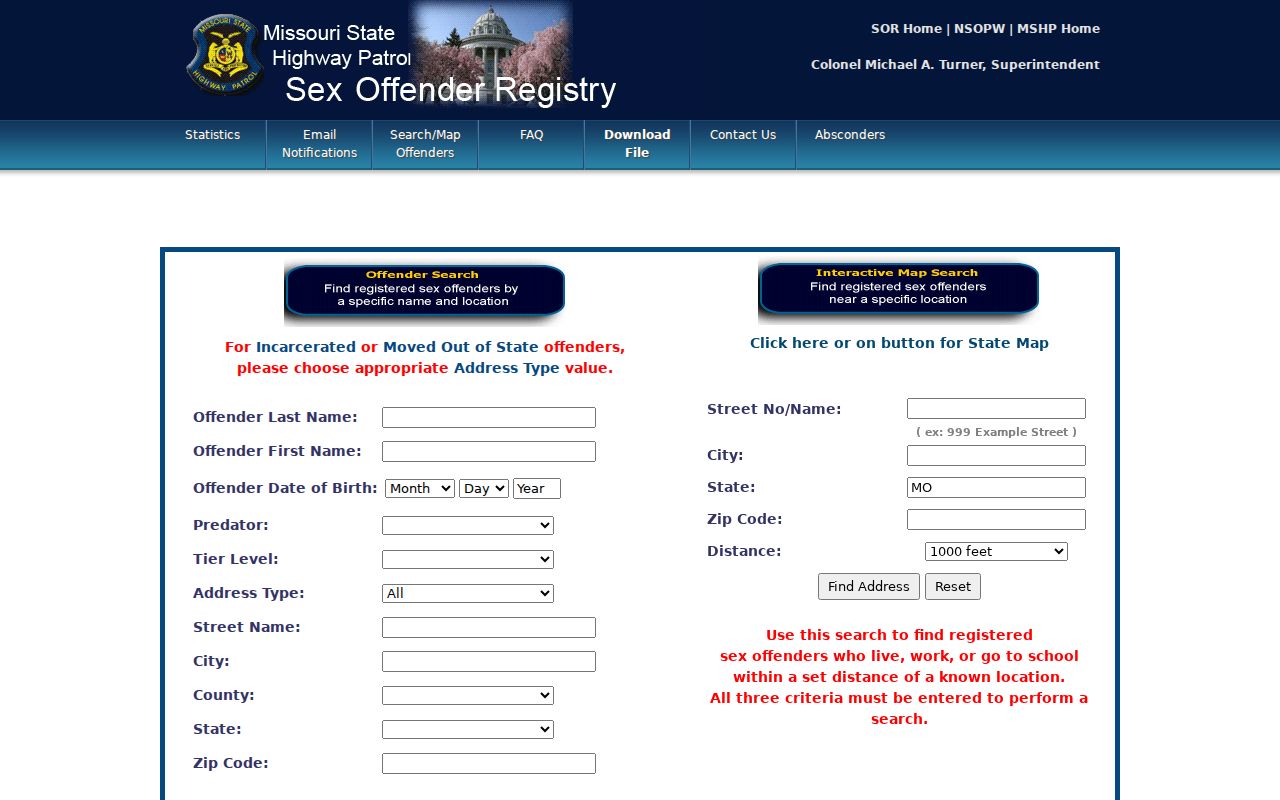
Its field layout makes the choice between a name search and a Texas County place search clear before results are reviewed.
Texas County Cross-State Searches
Texas County sits in south-central Missouri, yet a person's registration trail may cross state lines. The National Sex Offender Public Website, operated as a U.S. Department of Justice resource, searches participating state, territorial, and tribal registries. It is a supplement, not a replacement for Missouri's page. The state profile supplies Missouri-specific fields and tier context, while NSOPW helps when a former address or move may lie outside the state.
The official NSOPW entry screen provides that broader search layer for Texas County readers.
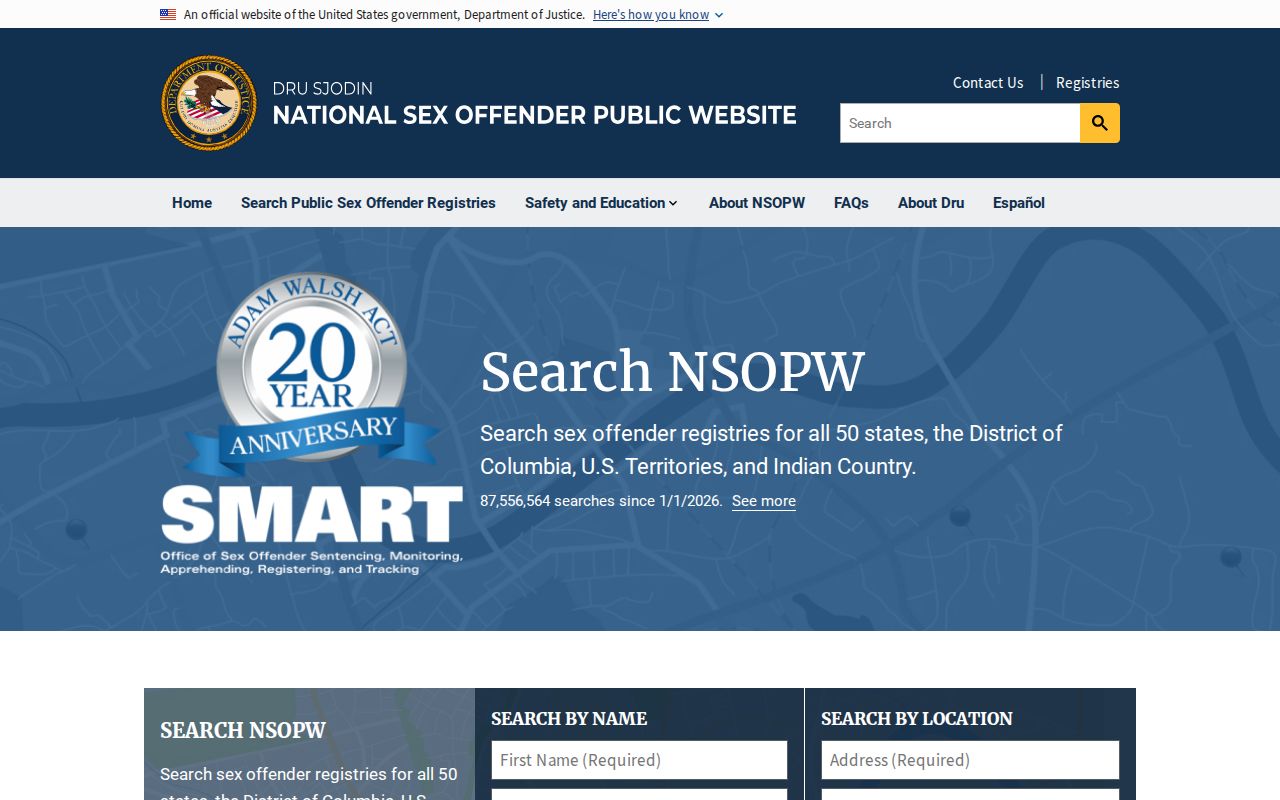
A careful search checks both systems when location history is uncertain, then confirms the current Missouri details with MSHP or the sheriff.
Do not treat a missing national result as proof that no registration exists. Public display rules and data timing differ among jurisdictions. Search spelling, aliases, and location fields can also affect a match.
Registry Profiles: What They Show
A Texas County public profile combines identity, registration, and qualifying-offense facts. It may show a photograph, name and aliases, physical descriptors, compliance status, tier, registering county, and residence details at the level Missouri law permits. Other collected and public fields can cover a vehicle, school, workplace, temporary lodging, online identifiers, and scars, marks, or tattoos. The offense line may include the statute, conviction or adjudication date, and jurisdiction.
| Name & Aliases | Public identity spellings used to distinguish records and support a careful match. |
|---|---|
| Photo & Description | A photograph and available physical traits, including public identifying marks. |
| Residence Information | The address information displayed under Missouri's public registry rules. |
| Offense & Statute | The qualifying offense, legal citation, conviction date, and jurisdiction when shown. |
| Tier | Missouri's statutory offense category, not an individual danger score. |
| Registration Status | The public compliance label and registering county shown in the current profile. |
A profile is not the person's full rap sheet. MSHP also notes that some people registered for kidnapping, felonious restraint, or child abuse may not appear on the public website. Searchers who need the underlying case outcome should use the court record rather than infer facts beyond the registry fields.
Texas County Profile Limits
The most common mistake is to read a Texas County registry entry as a current prediction of danger. MSHP says inclusion rests on the qualifying conviction. Missouri tiers come from offense and statute classifications. Neither the listing nor the tier is a personalized finding about the chance of future conduct. The profile also does not show every arrest, charge, dismissal, or conviction in a person's history.
The official registration-duration statute provides the legal frame behind a Texas County profile.
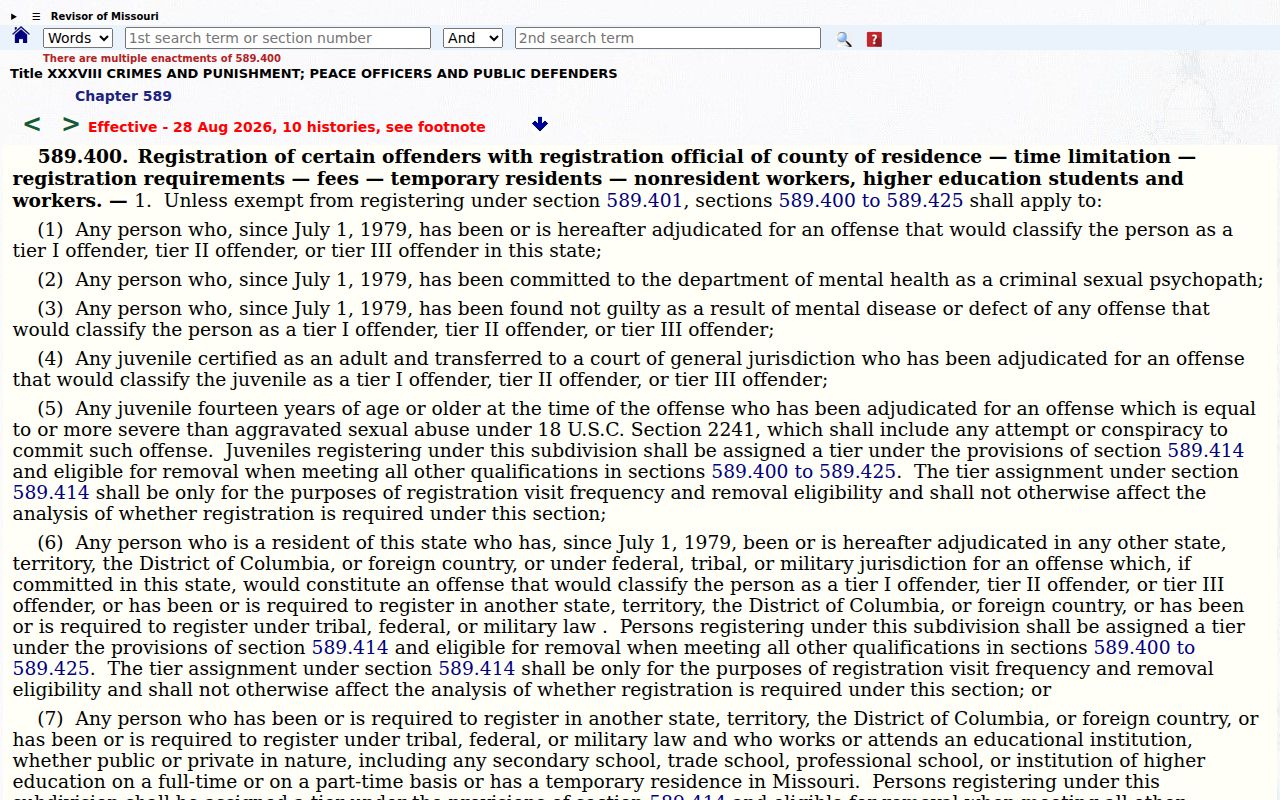
Reading the statute beside the profile helps distinguish the term of registration from the facts of the original court case.
Dates and compliance labels also need care. A displayed address can lag a reported change, and a status concern should go to the Texas County Sheriff or MSHP rather than social media. Use the record for awareness and fact checking, not speculation.
Registration Levels and Duties in Missouri
Missouri uses Tier I, Tier II, and Tier III categories. Under RSMo 589.400, the standard terms are fifteen years, twenty-five years, and life. A qualifying Tier I person may seek a five-year reduction after a ten-year clean record, while a qualifying juvenile Tier III adjudication may have a reduction route after twenty-five clean years. Eligibility depends on the statute. It should not be assumed from a Texas County profile alone.
| Tier | Standard Duration | Verification Principle |
|---|---|---|
| Tier I | 15 years | Statutory schedule; possible reduction after a qualifying clean period |
| Tier II | 25 years | Registration follows the statutory reporting schedule |
| Tier III | Life | Quarterly registration; a qualifying juvenile case may have a statutory reduction route |
The official registration-frequency law sets reporting duties that the Texas County registration office applies.
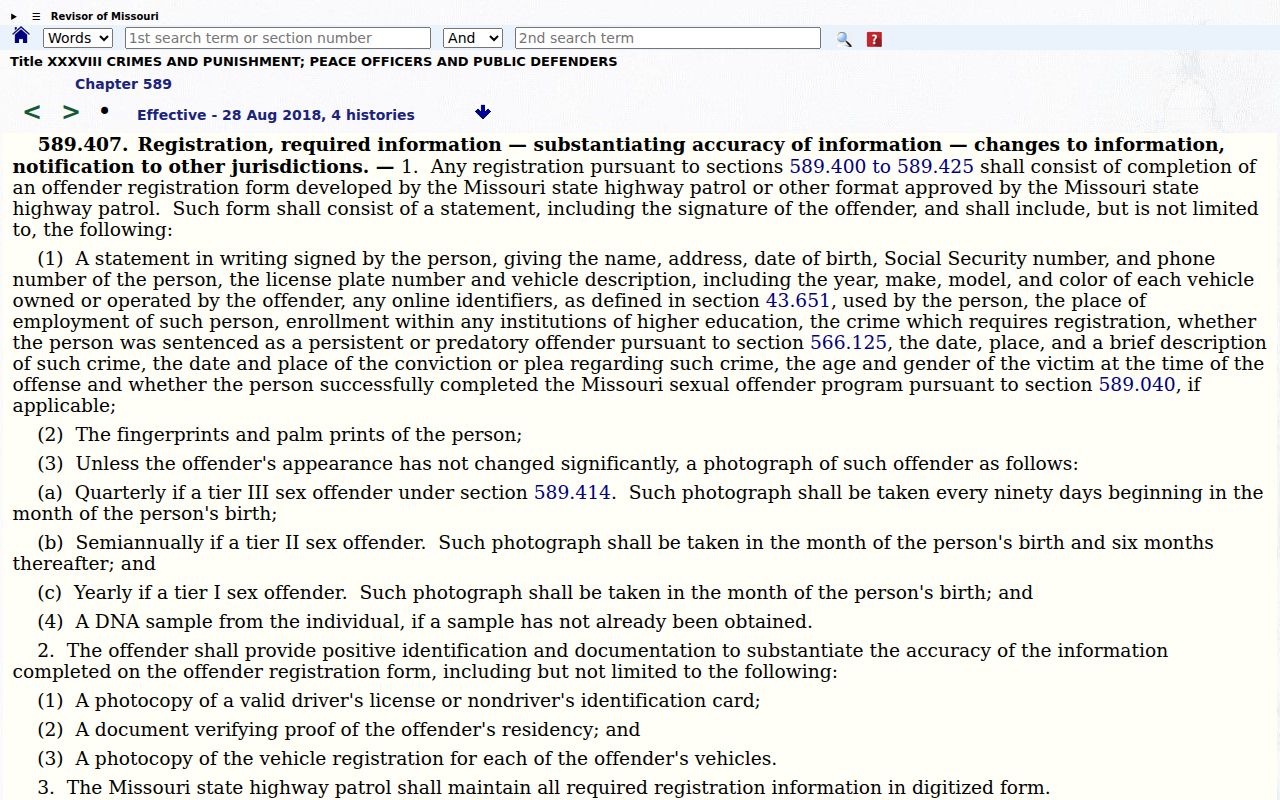
That legal schedule explains why Tier III profiles involve quarterly registration, while other obligations turn on the full statutory category.
Texas County Tiers Explained
The offense-to-tier definitions appear in RSMo 589.414. Texas County does not assign its own local risk levels. That matters because labels from other states can use different systems. Importing a “low,” “medium,” or “high” risk label into a Missouri search can misstate what the public record means.
The state's tier and public-access statute shows how Missouri classifies and publishes registry information.
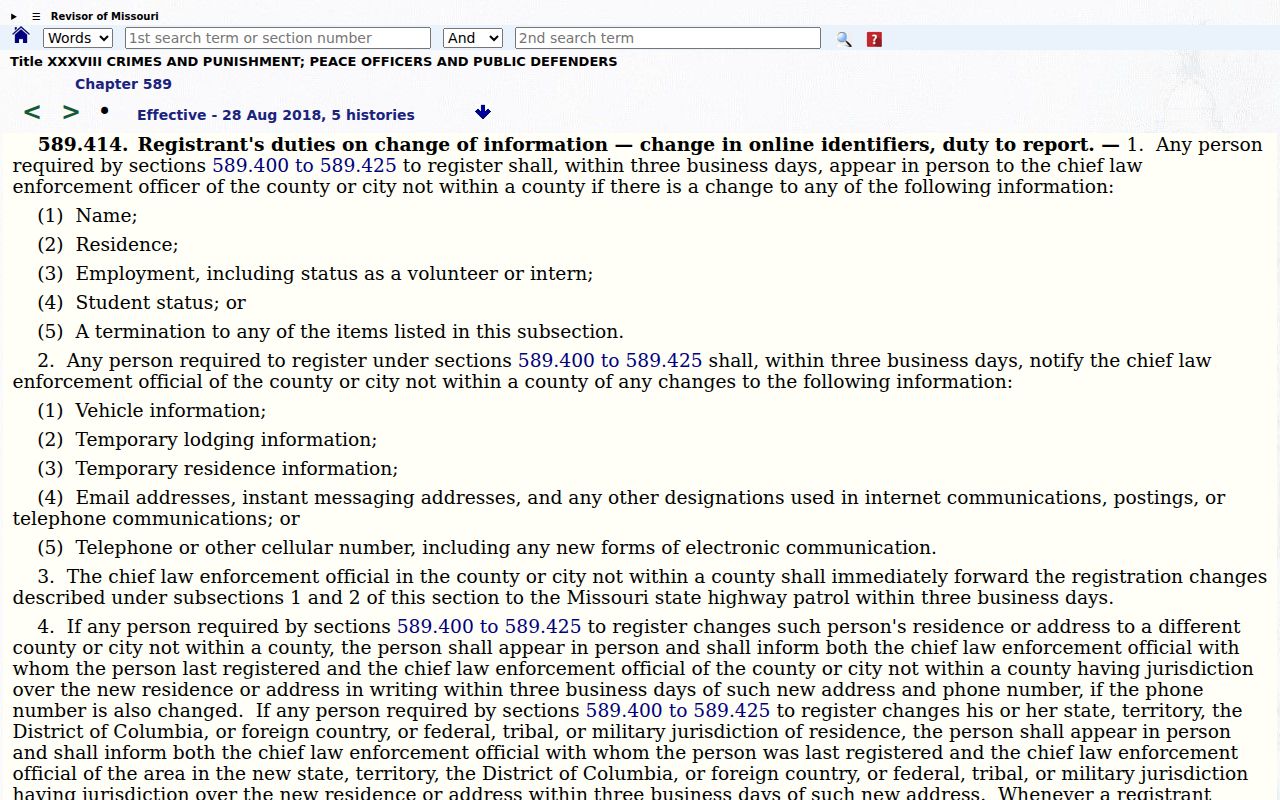
The statute anchors the tier label to Missouri law instead of a reader's own estimate of risk.
For community safety, focus on verified profile facts, current location data, and lawful precautions. If the offense record itself matters, Case.net and the Circuit Clerk are the better sources for charges, dispositions, and sentence details.
Report Texas County Address Concerns
If a Texas County address appears out of date or a person seems noncompliant, do not confront anyone. Contact the Texas County Sheriff at 417-967-4165 or the MSHP Sex Offender Registry line at 1-888-767-6747. MSHP also publishes mosor@mshp.dps.mo.gov for registry contact. Give the public profile details and the basis for the concern, then let the registering or investigating agency assess it.
This reporting path is different from correcting a search typo or resolving a court-record question. The sheriff handles the local registration file. MSHP manages the public state system. The Circuit Clerk holds the underlying Texas County prosecution file when it is a county case.
Note: A public status label can change, so record the profile date and let the responsible agency verify the current facts.
Using Registry Information Lawfully
Texas County registry information is meant to support informed safety choices and community awareness. Readers may use it to understand a listed address, talk with family members about boundaries, or contact officials with a well-founded concern. The data does not authorize threats, public shaming, trespass, surveillance, or direct action against a registrant or household.
Use the record lawfully: RSMo 589.414 governs Missouri’s public registry rules, and MSHP warns that using registry information to facilitate a crime is illegal. Never threaten, harass, intimidate, or take vigilante action.
Missouri's registry terms should guide every Texas County lookup. Verify a match before relying on it, respect information that is not public, and report suspected noncompliance through official channels. The sheriff and MSHP can assess facts that a web profile cannot show. A calm, source-based response protects both community safety and the integrity of the record.