
Texas County Criminal History Checks
Begin with the most direct public source. Missouri Case.net answers whether prosecutors filed a Texas County criminal case and what happened in court. Select the 25th Judicial Circuit or Texas County when the search form offers that choice. The Texas County Circuit Clerk says a local 25th Circuit search reflects entries in real time, while the broad “All Participating Courts” option can lag by up to three hours. A case number is often more reliable than a name, especially when a protected party cannot be found through litigant search.
Use a complete name, spelling variants, and a date of birth when the official channel accepts it. Compare the court, filing date, case type, and charge data before treating a result as the right person. Then open the source file instead of relying on a result-list label.
- Choose the record question: court outcome, current jail custody, statewide history, or state supervision.
- Search Case.net for a filed Texas County case, using the 25th Circuit filter and a case number when known.
- Call the Texas County Sheriff for current jail or rural arrest information because no official county roster was found.
- Use MACHS for qualifying statewide repository history and MODOC for prison or supervision status.
- Ask the originating clerk or agency about copies, certification, redactions, cost, and delivery.
Note: A missing court result does not prove that no arrest occurred, since charges may not yet be filed or may never be filed.
Texas County’s Five-Office Record Trail
No single database contains every Texas County criminal record. The arresting agency writes the event report. The county jail records intake and custody. The prosecuting attorney decides whether to file charges. The Circuit Clerk records the prosecution, judgment, and sentence. Finally, the Missouri State Highway Patrol Central Repository links qualifying arrest cycles and dispositions at the state level.
The official Texas County government site is a useful local starting point, but legal custody remains split among offices. The county’s sheriff resource page points readers to several state systems for that reason.
The county government source below shows the local office gateway used to reach elected officials and record custodians.
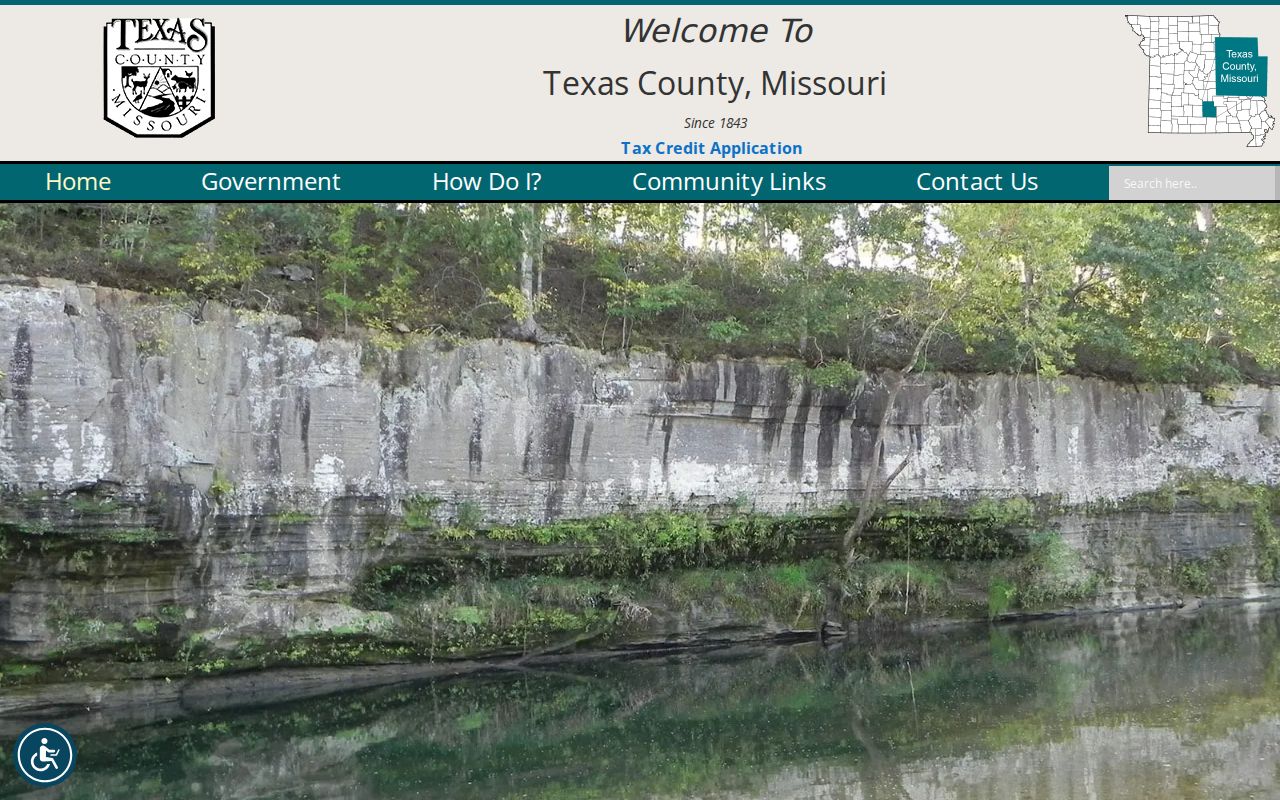
That gateway helps identify the office, while the record itself must still be confirmed with its custodian.
| Question | Official channel | Main limit |
|---|---|---|
| Was a case filed? | Case.net and Circuit Clerk | Sealed files and some documents remain unavailable |
| Is someone in the county jail? | Sheriff phone or lobby | No official online roster was located |
| What open Missouri history appears? | MACHS name search | Possible match, not fingerprint proof |
| Is someone in state custody? | MODOC Offender Search | Not a full court history |
Official Background Checks in Missouri
The Missouri State Highway Patrol Criminal Justice Information Services Division runs the state Central Repository and the Missouri Automated Criminal History Site, known as MACHS. Any member of the public may order an open-record name search. The official fee is $15 plus the portal convenience charge. A name search may return possible matches. It is broader than one Texas County case file but is not a fingerprint-confirmed identity.
A fingerprint search begins through the MACHS Fingerprint Search Portal and uses IDEMIA or IdentoGO Missouri appointment locations. The state-only electronic check combines a $20 Missouri fee with a $12 vendor service fee. An optional notarized response adds $5. The official MSHP material contains an inconsistency for the federal component, so confirm the total while scheduling. People reviewing their own federal record can use the FBI Identity History Summary route instead.
The official MACHS source image below shows the state portal that separates name and fingerprint products.
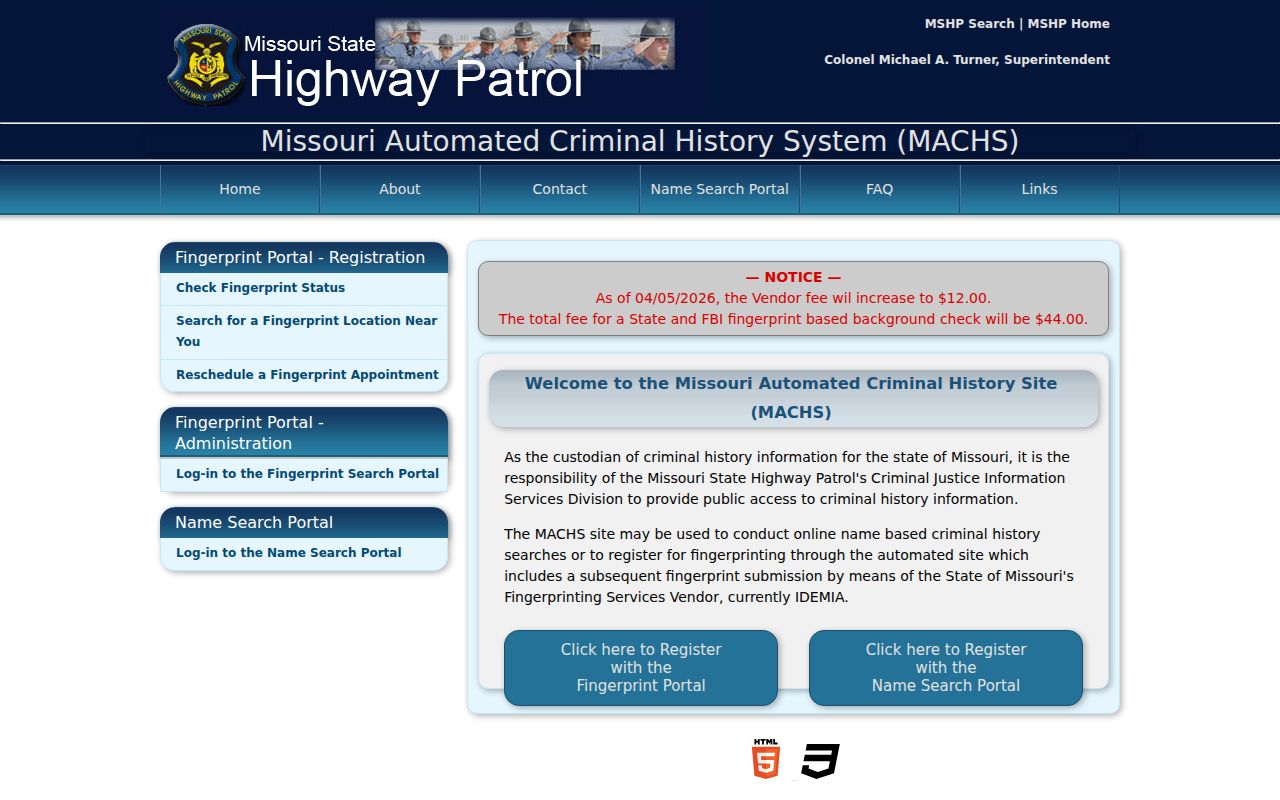
Those two products serve different identity needs and should not be treated as interchangeable.
| Product | Published charge | Key point |
|---|---|---|
| MACHS name search | $15 plus convenience fee | Possible-match open record |
| Missouri fingerprint search | $20 state plus $12 vendor | Electronic identity-based route |
| Notarized result | $5 | Must be selected at submission |
| FBI self-summary | $18 federal fee | Subject-only federal review |
Texas County Justice Records
The Texas County Justice Center at 519 North Grand Avenue in Houston concentrates several offices without merging their records. Built in 2007 and 2008, it houses the Circuit Clerk on the second floor, the prosecutor, judges, sheriff, and the 72-bed county jail. The current county-wide hours are 8:00 a.m. to 4:30 p.m. on weekdays, excluding listed holidays. Call the destination office before making a trip, since file access, certification, payment, and archive retrieval can require separate steps.
The official county location page distinguishes the Justice Center from the 1932 courthouse and Administrative Center at 210 North Grand Avenue.
The county location capture below identifies the modern criminal-record hub on North Grand Avenue.
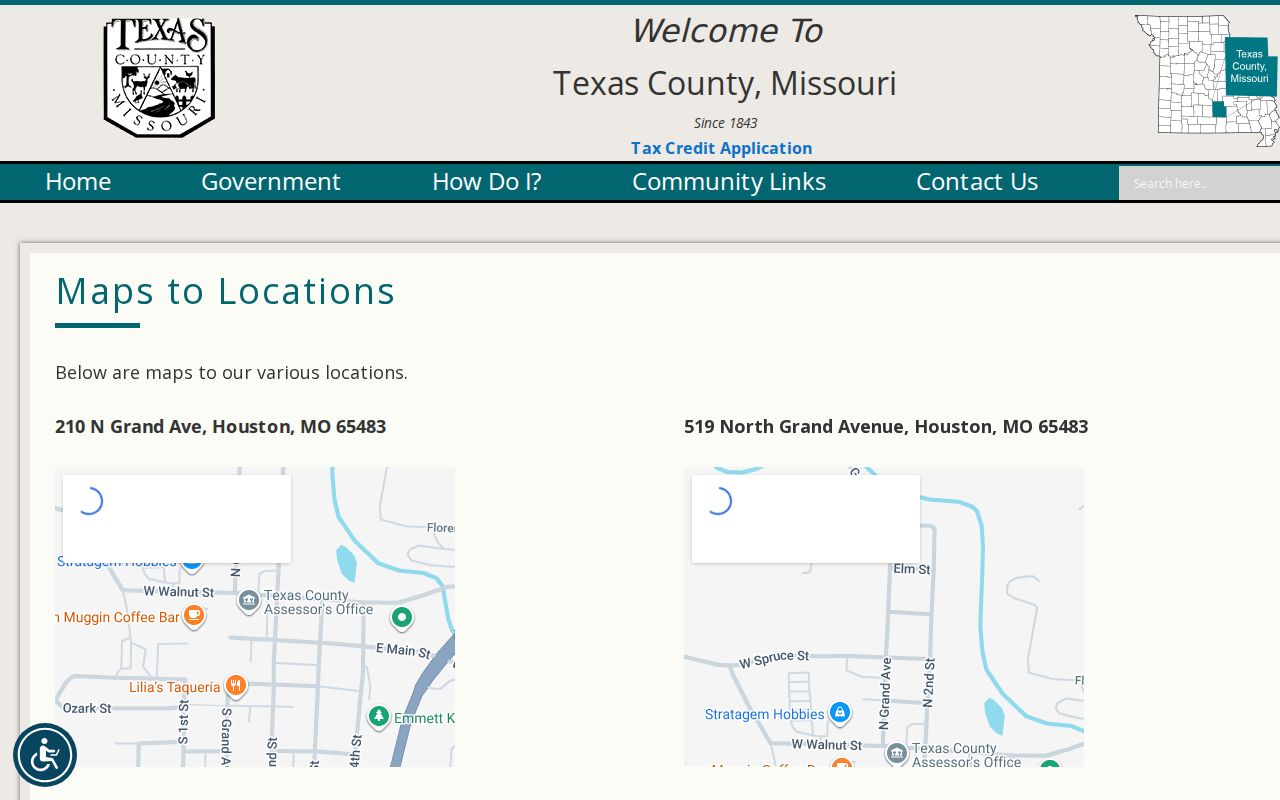
The address is shared, but requests still go to the clerk, sheriff, prosecutor, or other office that holds the desired item.
Circuit Clerk
Suite 202, 519 N. Grand Ave., Houston, MO 65483
417-967-3742
Criminal case dockets, judgments, and copies
Sheriff and Jail
519 N. Grand Ave., Houston, MO 65483
417-967-4165
Rural reports, booking, warrants, and custody
Prosecuting Attorney
Suite 102, 519 N. Grand Ave., Houston, MO 65483
417-967-2029
State charging office and victim services
Kinds of Criminal Records
Texas County criminal records describe different moments in one event. An incident report tells what an officer first documented. An arrest report records the legal basis, time, location, and arrest charge. Jail staff create a booking record. Prosecutors may then file a different charge, and the court’s final disposition may differ from both.
- Police and sheriff reports: request these from the agency whose officer created them.
- Bookings and jail status: contact the Texas County Sheriff for local custody.
- Court case files: use Case.net and the Circuit Clerk for filed charges and outcomes.
- Repository history: use MACHS for qualifying open Missouri records.
- Corrections records: use MODOC for prison, probation, and parole information.
A warrant can involve both the issuing court and law enforcement. Texas County has no verified official online warrant list. Call the sheriff, check the known case docket, and contact the issuing court. Never substitute a commercial list for current official status.
Rural Texas County Record Custody
Texas County covers 1,179 square miles, and the sheriff describes more than 1,000 miles of maintained gravel roads plus forest roads. A deputy, city officer, state trooper, conservation agent, or federal officer may create the first report. Follow the badge and event location, not just the county name. Houston Police keeps Houston reports. Cabool and Licking police keep their own city reports. The sheriff keeps rural deputy reports and county jail bookings.
The county history source provides the geographic and courthouse context shown below.
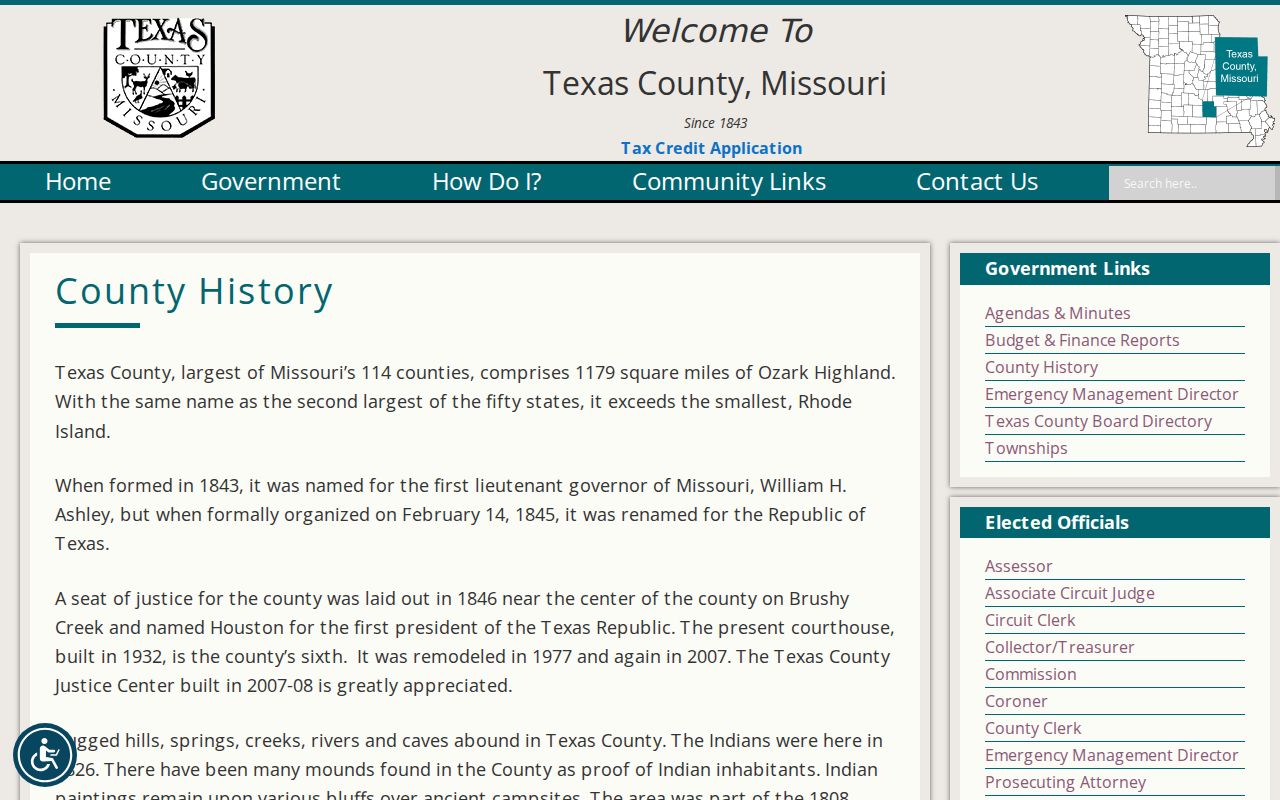
That broad rural footprint explains why identifying the arresting or investigating agency is the first practical search step.
Texas County Criminal Records: What They Contain
A Texas County record may show identifiers, allegations, custody details, filed counts, court events, disposition, sentence, and supervision. Read each field in context. An arrest charge is an allegation. A prosecutor’s filed count is the accusation before the court. The disposition states how each count ended. “Disposed” does not mean “convicted,” and one case can contain different outcomes across several counts.
| Name and Identifiers | Name, aliases, date of birth, and agency or case numbers as publicly available |
|---|---|
| Arrest and Booking | Agency, date, location, booking number, charges, holds, bond, and release data |
| Charges and Statutes | Count, legal description, Missouri statute, and offense class |
| Disposition | Conviction, dismissal, acquittal, plea result, or other count outcome |
| Sentence | Custody, fine, restitution, probation, and concurrent or consecutive terms |
| Supervision | MODOC custody, probation, parole, or conditional-release status when public |
- Disposition
- The outcome of a charge, such as conviction, dismissal, or acquittal.
- SIS
- A suspended imposition of sentence, with visibility that depends on its stage and Missouri law.
- SES
- A sentence that is imposed but not executed while probation conditions apply.
- Docket
- The dated sequence of filings, hearings, orders, and other case events.
Texas County Jail Record Fallback
No official online Texas County roster, booking log, sheriff app, or dedicated inmate portal was located. For current local custody, call the jail at 417-967-4165 or ask at the Justice Center lobby. Have the person’s full name and likely booking date ready. Ask separately about booking identity, current custody, charges or holds, bond, and release status that staff may lawfully provide.
Use MODOC Offender Search only after a transfer to state custody or for state supervision. It does not list county pretrial detainees. VINELink may provide event notices where participation covers the case, and the federal BOP locator serves federal prisoners.
The MODOC probation and parole source below illustrates the separate state supervision layer.

County jail custody and state correctional status require different searches.
Missouri Public Access Laws
The Missouri Sunshine Law favors public access, but open does not mean unredacted. Ask the agency that created the record. Under RSMo 610.023, a public body generally provides access by the end of the third business day or explains the delay and gives the earliest access time. RSMo 610.026 permits certain copy and search costs. Texas County publishes no sheriff-specific criminal-report fee schedule, so request a written estimate before authorizing work.
Key laws:
RSMo 610.011 directs liberal construction of Sunshine Law access.
RSMo 610.023 covers custodians, requests, and response timing.
RSMo 610.026 governs permitted copy and search charges.
RSMo 610.100 distinguishes incident, arrest, and investigative records.
RSMo 43.540 governs criminal-history dissemination.
Texas County Sunshine Request Fallback
When no portal supplies the item, describe the record precisely. State whether the request concerns an incident report, arrest report, booking entry, warrant record, CAD call, 911 audio, or body-camera file. Add the date, time, place, agency, and report, case, or booking number if known. Ask to inspect the record or receive it in a chosen format, and set a cost limit.
The MODOC Sunshine Law source shown below is for correctional records, not sheriff files. It demonstrates that corrections maintains a distinct request and data channel.
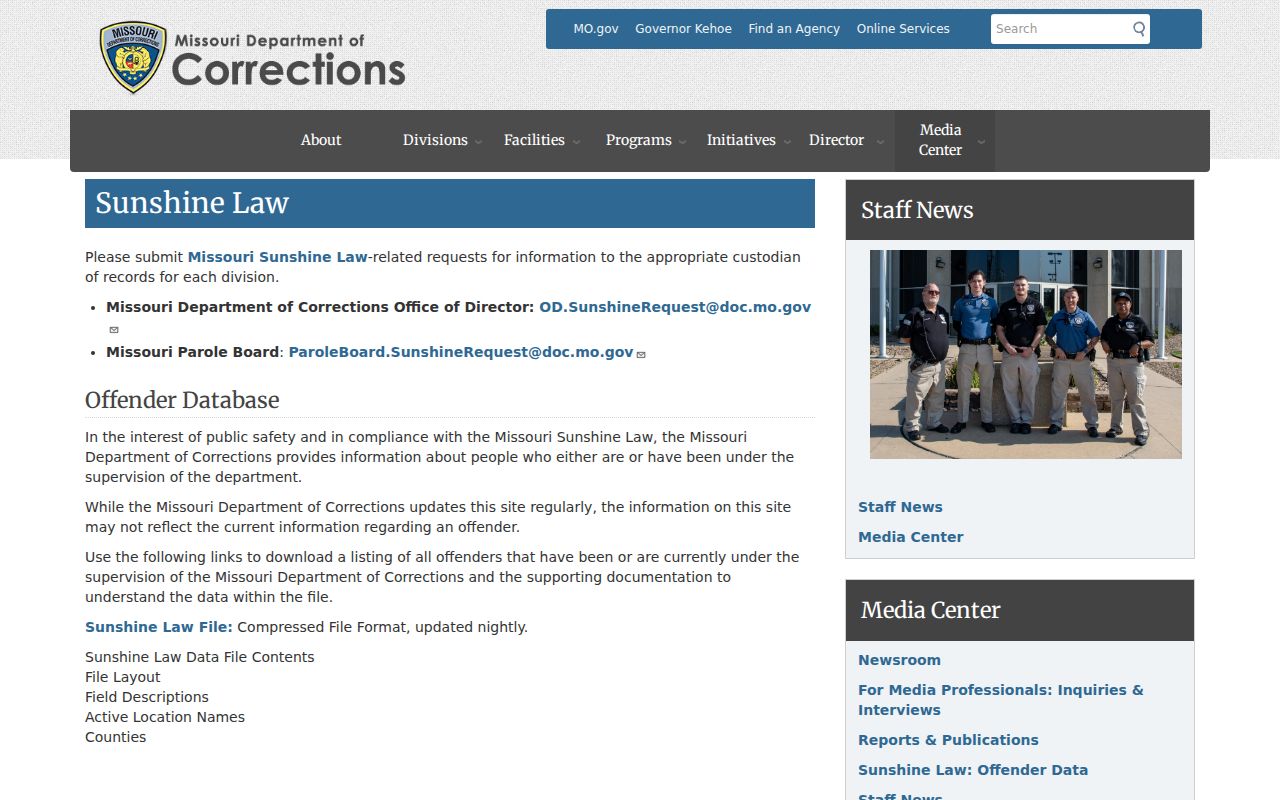
For a Texas County deputy report, direct the request to the sheriff instead of the state corrections custodian.
Texas County Records Survived Fire
Texas County’s record history reaches far beyond its current portals. The county was formed as Ashley County in 1843, organized and renamed for the Republic of Texas in 1845, and centered at Houston soon afterward. During the Civil War, Confederate forces burned Houston. County officials had moved record books to a cave on Arthurs Creek before the destruction, and the books were later returned. That local account explains why surviving public records can reach back to the county’s organization even though the seat itself burned.
Historic preservation and current criminal record access are not the same task. The Circuit Clerk handles active and archived court case material within the judicial system. The County Clerk and administrative offices hold other county records. Police, sheriff, repository, and corrections records follow their own retention and access rules. A genealogy question about an old county document therefore may begin at the 1932 courthouse and Administrative Center, while a modern charge or judgment belongs at the Justice Center or in Case.net.
This distinction prevents a common Texas County search error. A single North Grand Avenue visit does not reach every record merely because several offices sit close together. State court operating rules govern judiciary files. The Missouri Sunshine Law governs county and law-enforcement records subject to its exceptions. Repository dissemination rules control MACHS output. Name the event, approximate year, record type, and likely custodian before asking staff to search an archive.
Restricted, Sealed & Expunged Records
Juvenile files are generally confidential. Courts also withhold sealed cases, confidential attachments, victim or minor identifiers, and other protected material. Law enforcement may close parts of an active investigative file. A public case shell does not make every document downloadable.
Missouri expungement under RSMo 610.140 closes qualifying records by court order. A Texas County petition ordinarily goes to the municipal, associate circuit, or circuit court where the matter was charged or decided. Current general waiting periods are one year for qualifying misdemeanors, ordinance violations, and infractions, and three years for qualifying felonies after the sentence and supervision end. Major exclusions and lifetime limits apply. The petitioner must identify agencies that may hold the records.
Closed records remain available for limited purposes authorized by RSMo 610.120. Ask the Circuit Clerk about current filing, service, copy, and fee-waiver procedures because an official Texas County filing fee was not located.
Texas County Fingerprint Record Route
A fingerprint-confirmed search is the better choice for reviewing one’s own Missouri record or resolving a possible name mismatch. Register through the state fingerprint portal, select the authorized reason when required, and schedule with IDEMIA. Bring the identification the appointment instructions require. MSHP, rather than the vendor, evaluates the record data.
The official IdentoGO Missouri locator pictured below should be used to find the current nearest site. The research did not verify a stable Texas County storefront, so no local address should be assumed.
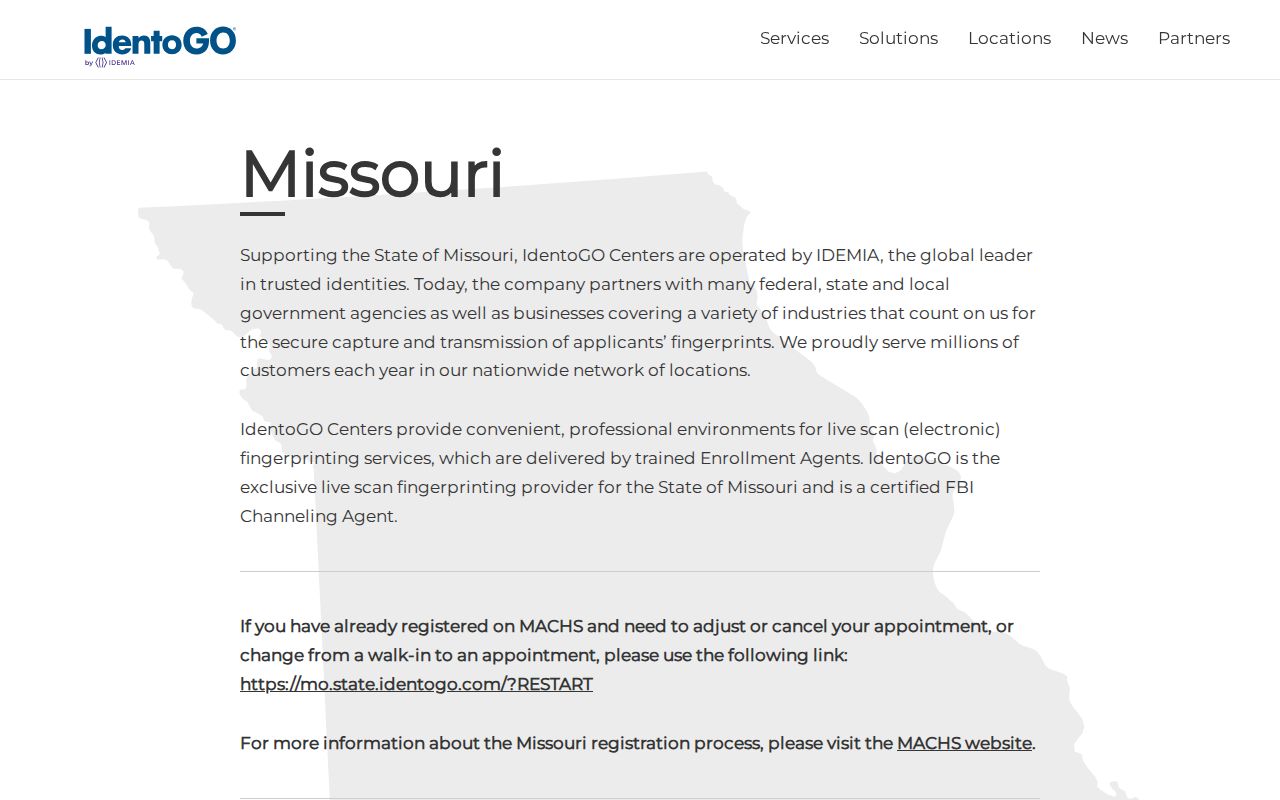
Call 844-543-9712 if the locator does not provide a workable appointment option.
City-by-City Criminal Records in Texas County
City police reports begin with the city department, while bookings may move to the Texas County jail and state-law cases move into the 25th Judicial Circuit. Census Vintage 2025 estimates rank Licking, Houston, and Cabool as the county’s three largest incorporated cities. Each has a different local record route.
Licking Record Check
Population 2,958. Police reports begin locally, while ordinance matters now route through the associate circuit system.
Houston Record Check
Population 2,281. City police, municipal court, county courts, and the jail have distinct roles.
Cabool Record Check
Population 2,089. City Hall, police, municipal court, and Case.net provide separate channels.